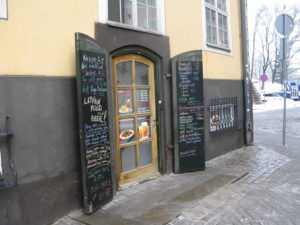
So we slept in our last day and perhaps missed out on some time we might have spent seeing more of the city but we were so tired and it was nice to sleep in and have a nice leisurely breakfast.
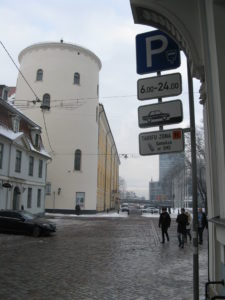
Soon we were off to see if we could get into any of the churches we couldn’t get into on Monday. Some were open so that was great. We also went to see the President’s palace again. Here are some pictures of our last day in Riga.
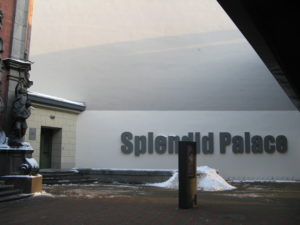
The sign is hidden as is the palace itself.
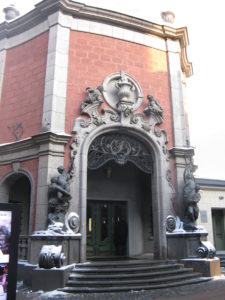
It is actually a movie theater and not as old as it looks but it is a very interesting building. It was not open for us to go into and it might have cost too much if it had been.
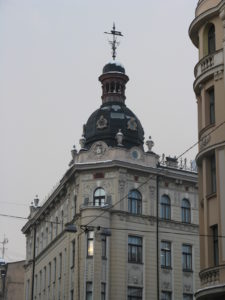
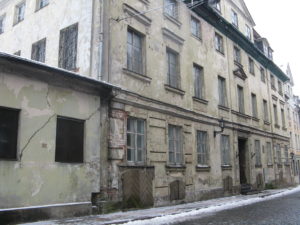
This was behind our hotel and seems so interesting I took a picture – no idea what it is.
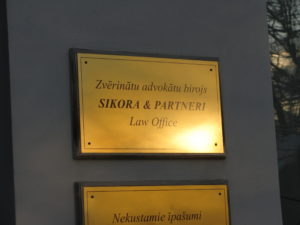
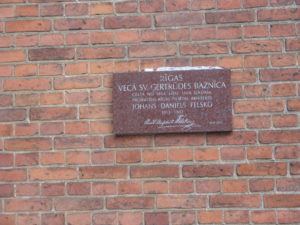
Walking down the street near our hotel we saw this sign – wonder if Bishop Sikora has relatives in Riga?
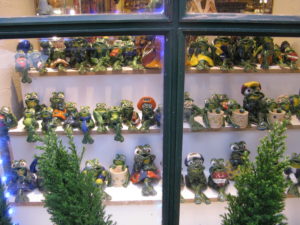
Back in old town Riga we passed several shops. This one had a great display of frogs. Some windows were still decorated for the holidays.
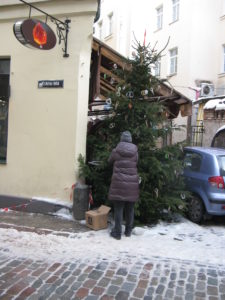
On one of the side streets a woman was putting pretzels on a tree – perhaps for the birds.
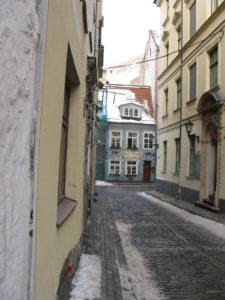
This house at the end of this little street is so quaint. On closer look it is very old. Dated 1221.
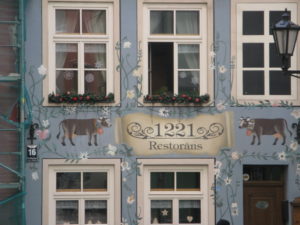
Here is the sign on the blue house. It is actually quite famous and you can google it.
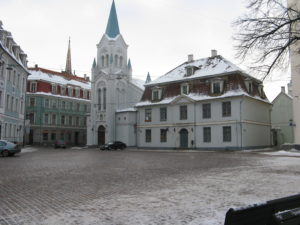
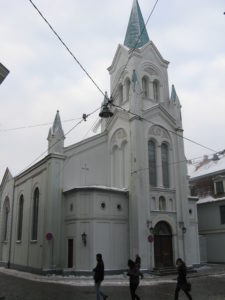
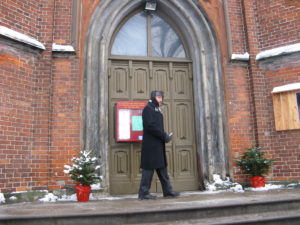
Another view of the cute little catholic church we found and the house next to it.
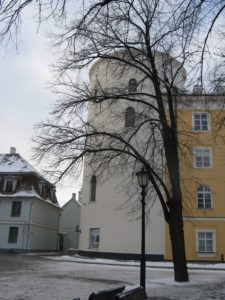
The president’s palace.
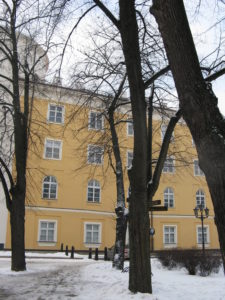
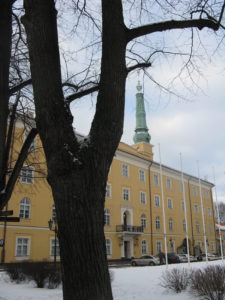
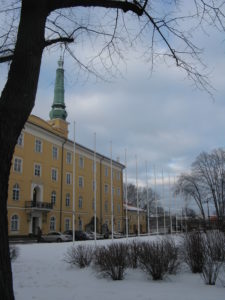
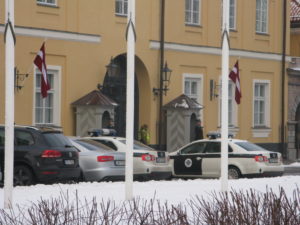
Can you see the entrance with the guard house on the right? There is a matching one on the left and a police man patrolling the front.
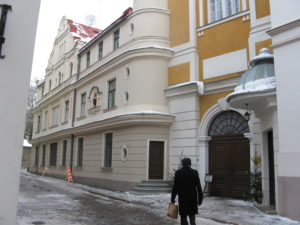
Yet another church
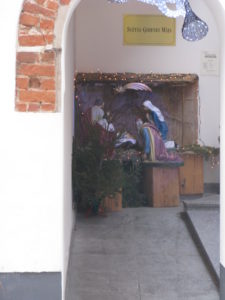
This nativity is in an alcove of a building.
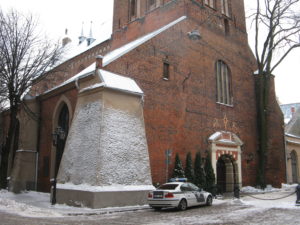
Revisiting St. Jacob’s Church.
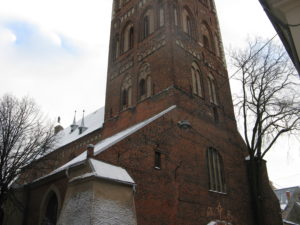
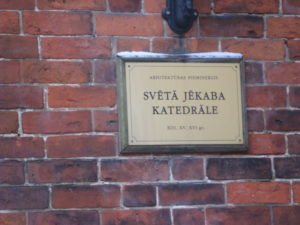
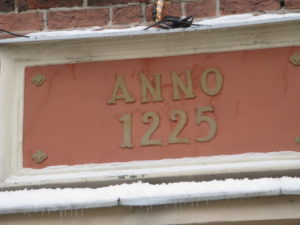
This date is over the door of St. Jacob’s Church.
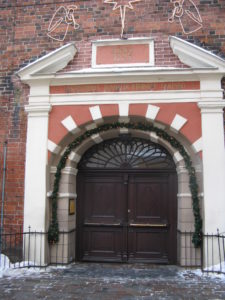
These little alcoves are everywhere.
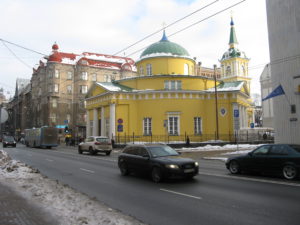
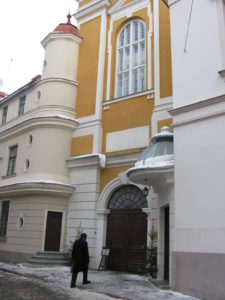
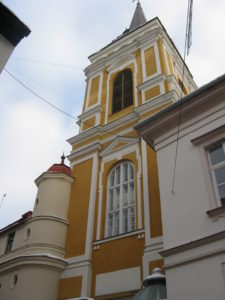
A very yellow church
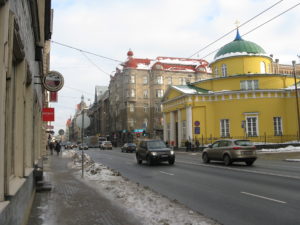
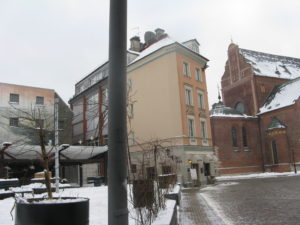
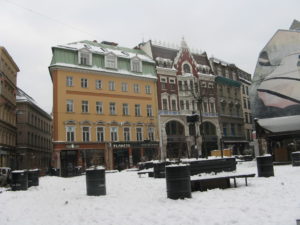
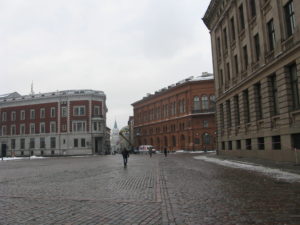
One of many wide streets in “new” Riga. The travel agent told us the new buildings are maybe 100 years old not like old Riga. Seems old to us.
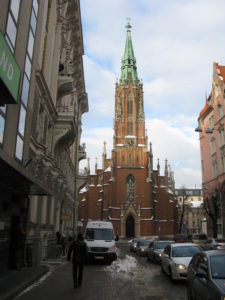
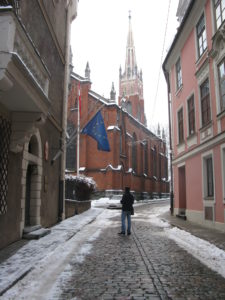
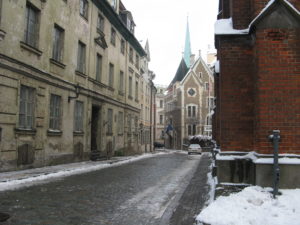
This church you could see from the back window of our hotel. It is in a kind of alley, narrow street, almost hidden. It was all locked up.
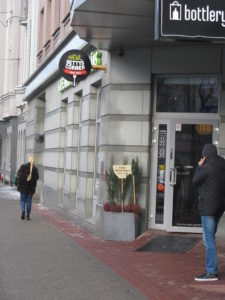
This is the sign and entrance into Betty’s Corner where we ate. There is also a sign for the Bottlery which is next door and sells alcohol.
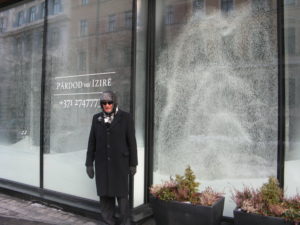
We passed this window as we went to the travel agent. Inside the window it is like a blizzard – three windows actually. Very interesting.
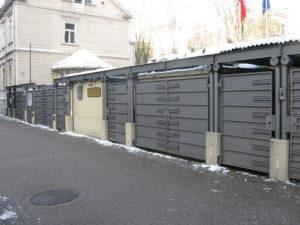
This is the Czech Embassy. It is really closed up.
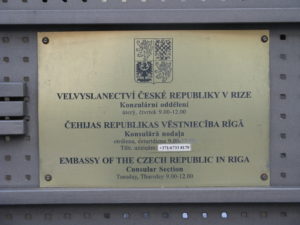
Sign for the Czech Embassy
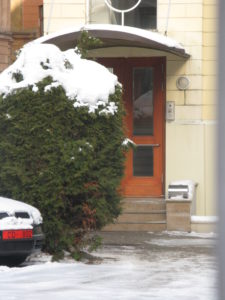
Peering through the hole in the gate of the Czech Embassy you can get a glimpse of the building itself. Most of the embassies are not so hidden.
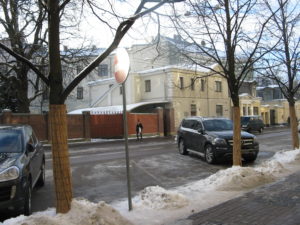
This is the back of the Ukrainian Embassy. We entered between the dark brown walls and the lighter ones.
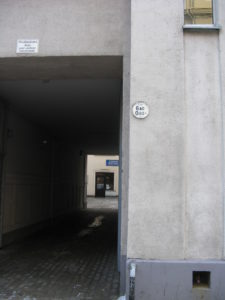
This is a close up of the entrance to the Ukrainian Embassy back door we entered.
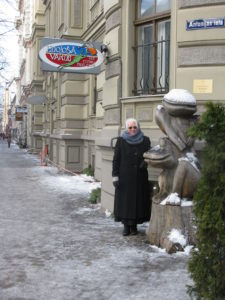
One of the restaurants we passed had a statue of two wooden frogs. that’s me standing near them.
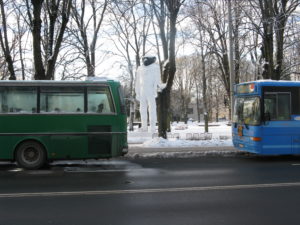
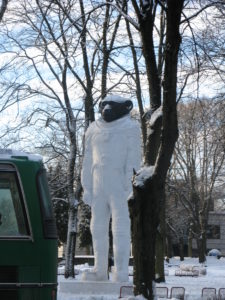
Statue of a monkey astronaut.
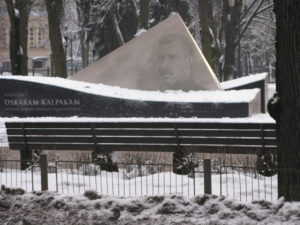
Oskars Kalpaks (6 January 1882–6 March 1919) was the commander of 1st Latvian Independent Battalion, also known as “Kalpaks Battalion”. Kalpaks was born to a farming family. Having decided to become a soldier he completed Irkutsk military school and then commenced service with the 183rd Pultusk Infantry Regiment. He displayed talent as a commander and heroism in battle during the First World War and was awarded the most significant Russian military decorations and made Regiment Commander in 1917. After the proclamation of Latvia’s independence on 18 November 1918, Kalpaks enlisted with the Ministry of Defence. He organised the defence of Vidzeme against Bolshevik attacks. On 31 December Kalpaks became Commander-in-Chief of all the armed units at the disposal of the Provisional Government of Latvia. Under his leadership, Latvia’s first armed formations became battle capable. On 28 February 1919, Kalpaks was awarded the rank of Colonel. From January to March 1919 the 1st Latvian Battalion fought with the German VI Reserve Corps to repel the Bolshevik raids into Kurzeme and this was the start of Latvia’s struggle for liberation. On 6 March 1919 near Air?tes, by mistake, Kalpaks was killed in a skirmish with German Freikorps troops. After his death, Kalpaks was posthumously awarded Latvia’s highest military award, the Order of L??pl?sis — first, second and third class. Although never officially assigned to this rank or position, Kalpaks is regarded as the first Commander in Chief of Latvian Armed Forces.
Kalpaks was honored on Latvian stamps in 1937 and again in 2007.
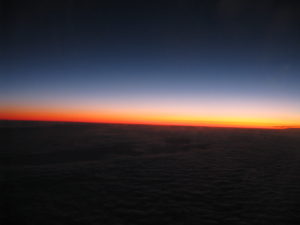
On our plane leaving Riga there was a beautiful sunset that lasted a long time. This is taken from our airplane window not long after departure.
So there it is all the pictures we took on our journey to Riga. Hope you enjoyed coming along.